
Great Leaders Don’t Create Followers
Great leaders develop future leaders instead of building organizations that depend on them for every answer.
They create confidence, judgment, and leadership capacity in other people.
For a long time, I thought leadership meant becoming the person everyone depended on.
I wanted to be the one with the answers.
Being able to solve the hardest problems made me feel valuable.
Whenever someone became stuck, I wanted them to come to me.
At first, that dependence felt good.
It made me feel needed.
Important.
Indispensable.
Then one day, I realized something that completely changed how I viewed leadership.
The more people depended on me, the less they were growing without me.
What I had interpreted as leadership was often creating dependence.
That realization felt uncomfortable.
However, it was also freeing.
From that point forward, I began asking myself a different question.
Instead of asking:
“How can I help?”
I began asking:
“How can I help this person become someone who will not need me for this problem next time?”
That is when leadership became multiplication instead of maintenance.
How Do Leaders Develop Future Leaders?
Leaders develop future leaders by changing how they measure success.
Many leaders measure their value by the number of people who rely on them.
Great leaders use a different standard.
They look at how many people have become capable of solving yesterday’s problems without them.
That does not mean people stop needing leadership.
Instead, the leadership relationship evolves.
Conversations become more strategic.
Questions become deeper.
Decisions become larger.
Over time, the leader no longer needs to provide every answer because other people have developed stronger judgment.
Growth is not about making yourself more important.
It is about making everyone around you more capable.
Dependency Can Feel Like Leadership
One reason dependence is difficult to recognize is that it often feels productive.
People ask for your opinion.
They seek your approval.
Your name appears in every meeting invitation.
Team members include you in every conversation.
Naturally, that attention can feel like influence.
Sometimes it is.
However, it can also be a warning sign.
When every decision flows through one person, growth eventually slows to that person’s pace.
Talent does not remove that limitation.
Neither does a strong work ethic.
Even the most capable leader has limited time, attention, energy, and decision-making capacity.
Therefore, leadership should not create traffic jams.
It should create momentum.
How Effective Leaders Develop Future Leaders
Being needed can feel rewarding.
Being effective produces a different result.
A needed leader becomes the answer to every question.
By contrast, an effective leader helps other people learn how to find strong answers.
The needed leader solves the immediate problem.
Meanwhile, the effective leader develops the person who will solve the next one.
Both approaches may produce a result today.
However, only one strengthens the organization for tomorrow.
This distinction matters because leaders can become addicted to being needed.
Dependence feels like proof that we matter.
Yet if the business cannot function without our constant involvement, our leadership may not be multiplying.
Instead, it may simply be maintaining reliance.
The Leadership Multiplier
One way I think about leadership is through a framework I call The Leadership Multiplier.
Every interaction with another person tends to create one of two outcomes.
It creates dependence.
Or it creates confidence.
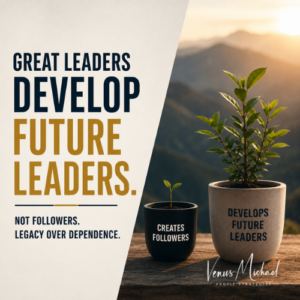
For example, when someone asks a question, do you immediately provide the answer?
Alternatively, do you help that person discover it?
After someone makes a mistake, do you take over?
Or do you coach them through what happened?
When someone succeeds, do you celebrate only the result?
Perhaps you also help them understand why they succeeded so they can repeat it.
Great leaders do not constantly solve problems.
Instead, they consistently develop problem solvers.
That is a very different investment.
Leaders develop future leaders one conversation at a time by choosing confidence over dependence.
Ask What the Moment Needs
Not every situation requires the same leadership response.
Sometimes a person needs a direct answer.
For instance, the issue may involve safety, legal risk, financial exposure, or a decision outside their authority.
In those moments, clear direction matters.
Other situations create an opportunity for development.
Before answering automatically, pause and ask yourself:
Does this person need information?
Are they asking for permission?
Could missing context be causing the problem?
Might a thoughtful question help them solve it?
Would coaching them now reduce dependence later?
Strong leaders learn to distinguish between a moment that requires direction and one that offers development.
The goal is not to withhold help.
Rather, the goal is to make the help more useful.
Teach Principles, Not Only Procedures
Procedures tell people what to do.
Principles help people decide what to do when the procedure no longer fits.
That difference matters because businesses constantly change.
Markets shift.
Technology evolves.
Customer expectations move.
Meanwhile, new problems appear.
No leader can write a checklist for every situation the team may encounter.
However, leaders can teach principles that guide decisions.
Those principles may include:
- Integrity
- Ownership
- Curiosity
- Stewardship
- Clear communication
- Respect
- Customer care
- Responsible decision-making
Once people understand those principles, they can make better decisions in situations they have never faced before.
That is when leadership begins to multiply.
Explain the Thinking Behind the Decision
Leaders often communicate a decision without explaining the thinking behind it.
They may say:
“Do this.”
“Do not approve that.”
“Respond this way.”
“Bring this to me first.”
The employee may follow the instruction successfully.
However, they may not understand why the decision was made.
As a result, the next unfamiliar situation returns to the leader.
To develop future leaders, share the reasoning behind your decisions.
First, explain which information mattered.
Next, describe the risks you considered.
Then clarify the principle that guided the choice.
Finally, point out what would have changed the decision.
That context helps another person build judgment.
Eventually, they begin recognizing the same patterns for themselves.
Let People Struggle a Little
This may be one of the hardest leadership lessons I have learned.
Sometimes the most helpful thing a leader can do is resist rescuing someone immediately.
Not because the leader does not care.
Rather, growth often lives just beyond discomfort.
Think about the skills you have developed.
Few of them came from another person completing the work for you.
Most developed because you tried.
Sometimes you failed.
Then you adjusted and tried again.
Leaders who remove every struggle may also remove growth opportunities.

Coaching is not rescuing.
It means staying close enough to support someone without carrying them across the finish line.
Productive Struggle Needs Boundaries
Allowing struggle does not mean abandoning people.
Development still requires support.
For that reason, the leader should clarify:
- The expected outcome
- The boundaries
- The available resources
- The level of authority
- The acceptable risk
- When to ask for help
- What requires immediate escalation
Within those boundaries, the person needs room to think.
They also need permission to try an approach that may not match the leader’s exact method.
Additionally, they need opportunities to make reasonable mistakes and learn from them.
Without that room, confidence cannot grow.
People become stronger through supported practice, not permanent protection.
Confidence Grows Through Evidence
Leaders cannot give someone confidence through encouragement alone.
Instead, confidence grows when people collect evidence that they can handle responsibility.
First, they make a decision.
It works.
Later, they solve a problem.
Perhaps they recover from a mistake.
Eventually, they navigate a difficult conversation or complete work that once required help.
Each experience becomes evidence.
Over time, the person begins trusting their judgment.
That is why leaders must provide meaningful opportunities to act.
A person cannot become a confident decision-maker while every choice is corrected, reclaimed, or overridden.
Capacity Comes From Multiplying Leadership
The fourth pillar of The Dragonfly Effect™ is Capacity.
Most people think capacity means creating more time.
That is part of it.
However, real organizational capacity grows when leadership is multiplied.
More people begin thinking like owners.
They make decisions with confidence.
Instead of waiting for constant permission, they take initiative.
Problems also move toward the people best equipped to solve them.
As a result, the business becomes larger than the founder.
That growth does not happen because the founder works harder.
It happens because the founder develops more leaders.
Develop Future Leaders Through Real Responsibility
Leadership development cannot remain theoretical.
To develop future leaders, you must give people meaningful opportunities to make decisions, solve problems, and learn from the results.
People need real work to own.
They also need decisions that matter.
In addition, they must have opportunities to experience consequences, solve problems, and build trust.
Begin with responsibility that matches the person’s current ability.
Then expand it as their judgment grows.
Perhaps they start by leading a meeting.
Later, they may own a client relationship.
Eventually, they could manage a process, budget, project, or team.
The responsibility should stretch them without setting them up to fail.
Development happens when the challenge is meaningful, and the support is appropriate.
Give Feedback That Builds Judgment
Feedback should do more than identify what went wrong.
It should help the person understand how to think more effectively next time.
Instead of saying:
“That was the wrong decision.”
Try asking:
“What information did you use?”
“What outcome were you trying to create?”
“Which risk did you consider?”
“What do you think you missed?”
“What would you do differently now?”
These questions help the person examine their reasoning.
Afterward, the leader can add context, clarify a principle, or correct a blind spot.
The goal is not only to improve one result.
More importantly, it is to improve the thinking that produces future results.
Celebrate the Thinking, Not Only the Result
Leaders often celebrate successful outcomes.
That matters.
However, the process deserves attention too.
When someone handles a situation well, help them identify why.
Perhaps they asked the right questions.
Maybe they communicated early.
They may have remained calm under pressure.
In another case, they might have used a company principle to make a difficult decision.
Recognizing the thinking helps the person repeat it.
It also teaches the rest of the team what strong leadership looks like.
Results matter.
Yet repeatable judgment creates long-term value.
Develop Future Leaders Who Multiply Leadership
Leadership multiplication becomes even more powerful when development moves beyond one generation.
The goal is not simply to help one employee become more capable.
Eventually, that person should know how to develop someone else.

The real goal is to develop future leaders who can recognize potential, coach judgment, and build confidence in others.
For example, they should learn how to coach.
They also need to ask better questions.
Over time, they must become comfortable providing useful feedback.
Additionally, they should know how to transfer ownership and create confidence instead of dependence.
At that point, leadership development is no longer limited to the founder or senior executive.
Instead, it becomes part of the culture.
That is how organizations become resilient.
Your Legacy Is Not Measured Only by What You Built
Someone once asked me what kind of business I wanted to build.
At first, my answer focused on numbers.
Revenue.
Growth.
Clients.
Impact.
Today, I think about the question differently.
I want to build people.
Businesses evolve.
Markets shift.
Even buildings eventually change.
However, people carry leadership with them.
When someone leaves my business thinking more clearly, leading more confidently, and making stronger decisions, that impact continues.
It may influence another company.
Perhaps it reaches another team.
Eventually, it may shape another generation of leaders.
That is a legacy no Balance Sheet can measure.
Conduct a Leadership Multiplier Review
Think about the last five questions someone asked you.
Then review your responses.
Did you provide the answer immediately?
Were you curious about what they had already considered?
Could they make the decision themselves?
Did your response build confidence?
Or did it reinforce the idea that you are the only safe source of direction?
Next, think about the last mistake someone made.
Consider whether you took over or coached them through it.
Also ask whether they were allowed to participate in the solution.
Finally, review a recent success.
Did you celebrate the result only?
Or did you help the person understand what produced it?
These small moments reveal whether leadership is multiplying or maintaining dependence.
A Challenge for This Week
Choose one person with leadership potential.
Do not begin by giving them more work.
Instead, identify one area where they can develop stronger judgment.
Then create an opportunity.
Perhaps they can lead a conversation.
Please allow them to make the decision.
Another option is to give them a problem to solve or ask them to present a recommendation.
They may even be ready to coach another employee.
Stay available throughout the process.
Clarify the boundaries.
However, resist taking over simply because their method differs from yours.
The goal is not to prove that you can do it better.
The goal is to help another person become better because you led them.
Venus’ Bottom Line
Leadership is not about becoming indispensable.
It is about making your presence less necessary because your influence now lives inside the people around you.
The strongest leaders do not build organizations filled with followers.
They develop future leaders who know how to think, decide, serve, and lead with confidence.
Your greatest contribution will not be limited to the work you complete yourself.
Instead, it will include the problems other people learn to solve.
It will show up in the decisions they become confident enough to make.
Ultimately, it will continue through the people they eventually develop.
Leadership reaches its greatest potential when it no longer stops with you.
It multiplies through the leaders you leave behind.